The Arslan Eyce Private Amphora Museum — 5,000 Years of Maritime Trade History in Taşucu
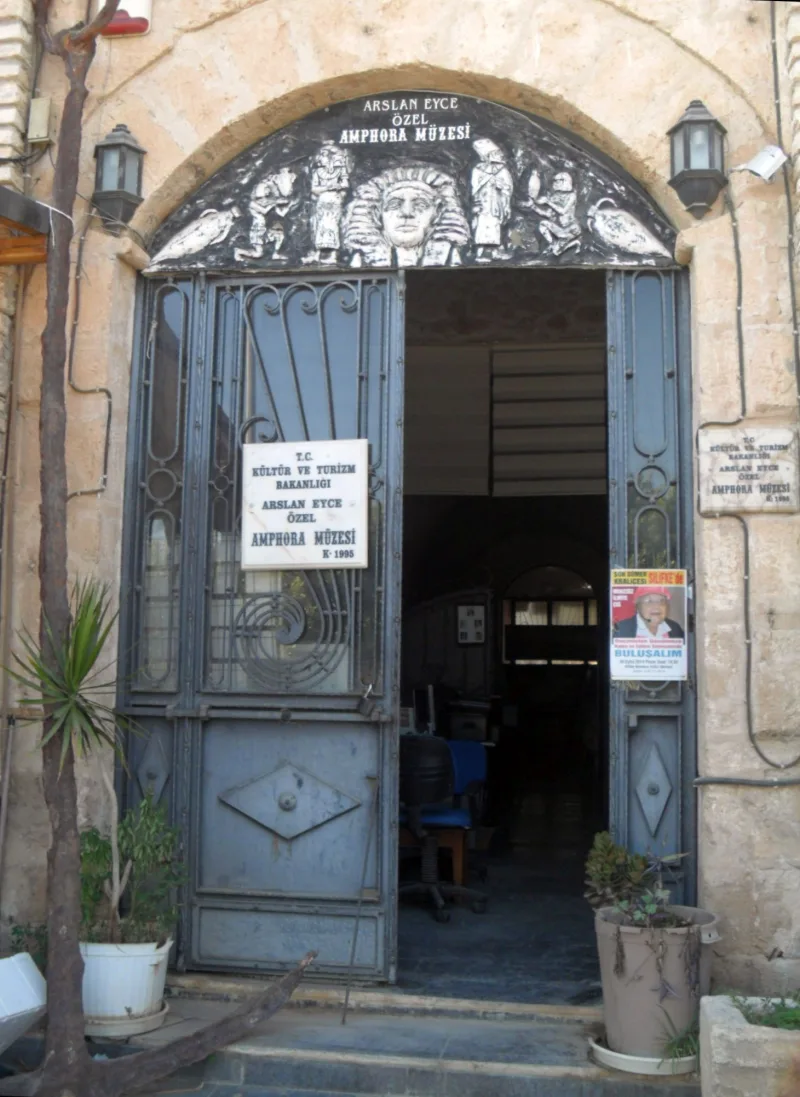
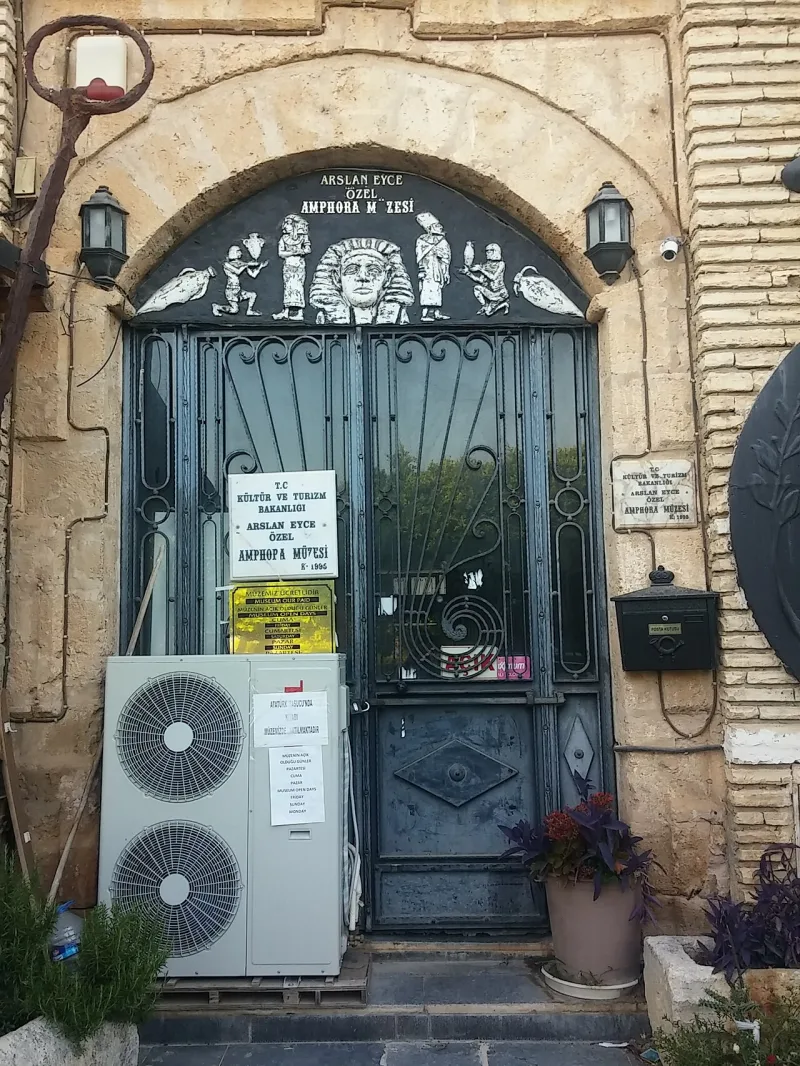
In the coastal town of Taşucu on the Mediterranean coast of Mersin Province stands a building from the early 19th century that once served as a warehouse. Today, it houses the Arslan Eyce Private Amphora Museum—the only museum of its kind in Turkey dedicated entirely to amphorae. The collection spans an impressive range: from 3200 BCE to 1800 CE—nearly five thousand years of maritime trade history, encapsulated in 400 clay vessels of various shapes, sizes, and eras. The Arslan Eyce Private Amphora Museum is a place where the history of the Mediterranean is told through the language of clay vessels that lay silent on the seabed and came to life in the hands of a single enthusiast.
History and Origins of the Aslan Eyce Private Amphora Museum
The history of the museum is, above all, the story of its founder. Aslan Eyce (1936–2018)—a native of Silifke, a cooperator, and a journalist by profession—spent forty years collecting amphorae from the seabed and the surrounding shores. Most of the exhibits come from shipwrecks: the waters off the coasts of Taşucu and Silifke are rich in sunken ships, as these areas have been a vital transit route between Egypt, Syria, Cyprus, and the ports of Asia Minor since ancient times.
Ancient Tashuju was called Holmi—a small but significant port city that was closely connected to inland Anatolia via the Göksu River valley. It was through the Göksu that the trade route ran from Central Anatolia to the Mediterranean; Holmi was the terminus of this corridor. Agricultural products produced in the region—grain, olive oil, and wine—were packed into amphorae and shipped by sea to other parts of the ancient world.
In 1992, Arslan Eyje established the first waqf (charitable foundation) in the history of Taşucu and donated an early 19th-century building for use as a museum. In 1997, he transferred management of the collection to the Turkish Ministry of Culture and Tourism. After the necessary work to equip and organize the exhibition, the museum officially opened to visitors in 2003. Today, the building is owned by the foundation; the waqf is supervised by the General Directorate of Foundations of Turkey and owns several properties in Silifke and Taşucu.
The result of Arslan Eyce’s forty years of work is 400 amphorae, each of which is a unique artifact. This is not merely a personal collection: it is a systematic snapshot of Mediterranean maritime trade spanning five millennia. The museum’s opening in 2003 marked recognition of the significance of this work both in Turkey and internationally.
Architecture and What to See
The museum is located in an early 19th-century building on İsmet İnönü Boulevard (İsmet İnönü Bulvarı)—the main street of Taşucu. The building itself originally served as a warehouse: massive walls, vaulted ceilings, and small windows to keep the interior cool—classic regional architecture of the late Ottoman period. This functional character of the building fits surprisingly well with the nature of the exhibits stored here: the amphora, too, was first and foremost a container, a utilitarian object that became a monument.
The Amphora Collection: Chronology and Typology
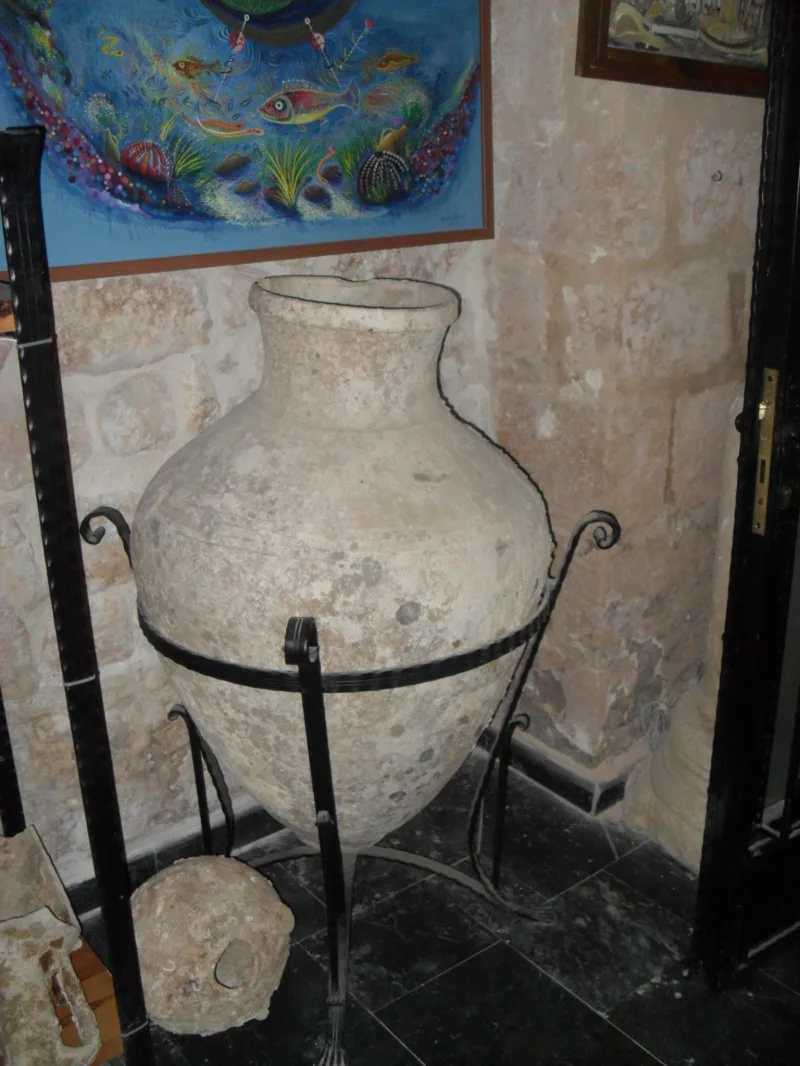
The museum’s greatest asset is the diversity of its collection. The 400 amphorae span a time range from 3200 BCE to 1800 CE. This means that vessels from the Bronze Age, the Greek Archaic period, the Classical period, the Hellenistic period, the Roman period, and the Middle Ages are displayed side by side in the showcases. The shape of the amphora changed over time: in the Bronze Age, they were squat, wide-mouthed vessels; in the Classical period, the Greeks developed a slender conical type with a pointed bottom; the Romans standardized production by region—and a specialist can determine where a ship sailed from based on the find. The Tashuj Museum allows visitors to compare these types directly, keeping their chronological sequence in mind.
Maritime Theme: Amphorae from Shipwrecks
Amphorae recovered from the seabed are of particular value. Seawater preserves ceramics differently than soil: the surface becomes covered with deposits, shells, and traces of marine organisms. These traces are not defects, but evidence: they reveal the depth, the duration of submersion, and sometimes the cargo that was transported nearby. Arslan Eydje collected precisely such exhibits: those bearing the history of the seabed.
The warehouse building as an exhibition space
The atmosphere of a 19th-century warehouse blends well with the exhibition: in the high-ceilinged halls with thick walls, amphorae stand in rows and groups, organized by era and region. The absence of elaborate interior design works in the exhibits’ favor—attention is focused on the vessels themselves. It’s easy to take photos: good side lighting highlights the texture of the clay and the shape of the handles.
Local Context: Tashuju and Holmi
After visiting the museum, it’s worth heading out to the Tashouju waterfront to look out over the bay: this is where ships loaded with the very amphorae now displayed behind glass used to dock. The town is small and pleasant, with seafood restaurants and a ferry terminal. A ferry from Tashuju runs to Northern Cyprus (Kyrenia/Girne)—a unique route connecting Turkey with the island, which in antiquity was also an important transit point for Mediterranean trade.
Interesting Facts and Legends
- Arslan Eyje collected amphorae for forty years—longer than the history of many state museums. His private collection made it possible to preserve and catalog finds that would otherwise have ended up in private hands or on the antiquities market.
- The museum’s oldest exhibits date back to 3200 BCE—the Early Bronze Age, when the first Mediterranean seafarers were establishing routes between Anatolia, Syria, and Egypt. The most recent ones date to 1800 CE, that is, the Ottoman period.
- Ancient Tashucu was known as Holmi and was connected to Central Anatolia via the Göksu River valley. It was here, according to one account, that the German Emperor Frederick I Barbarossa, who was heading to the Crusades, drowned in 1190 while crossing the Göksu.
- The museum building is one of the few surviving early 19th-century warehouse structures on the Mersin coast. Its architecture is in itself a historical monument of the late Ottoman period.
- The waqf, founded by Arslan Eyje in 1992, was the first of its kind in the history of Taşucu. This means that the creation of the museum was not merely a collector’s gesture, but a conscious act of institutional building for the local community.
How to get there
Taşucu is located in Silifke, Mersin Province. The museum’s coordinates are 36°19′03″ N, 33°52′40″ E. The museum is situated on İsmet İnönü Boulevard—the town’s main street—a few minutes’ walk from the waterfront and the ferry terminal.
The nearest major airport is Adana Şakirpaşa (ADA), about 120 km to the east. Buses run from Adana to Silifke; the journey takes about 1.5–2 hours. From Silifke to Taşucu is another 10 km, about 15 minutes by taxi or dolmuş. Direct buses from Mersin to Silifke run regularly; the distance is about 80 km. From Antalya: about 400 km via the D400 highway; it’s convenient to break up the trip with a stop in Alamut or Anemurium.
Tips for travelers
The museum is small, so a visit takes 45–60 minutes. For a deeper understanding, it’s best to hire a guide from Silifke or study the typology of amphorae in advance—then the 400 vessels from different eras transform from a homogeneous mass into a fascinating chronology. Introductory articles on Lycian, Cypriot, and Rhodian amphora types are available online—a good read before your trip.
Combine a visit to the museum with other regional attractions: Mamure Castle in Anamur, Anemurium, Silifke Fortress, and the Basilica of Saint Thecla (Aya Tekla)—all within a 50-kilometer radius. A ferry from Taşucu to Kyrenia (Northern Cyprus) will add a Mediterranean dimension to your trip. Near the museum are excellent seafood restaurants overlooking the bay; fresh fish in the province of Mersin is one of the region’s greatest culinary delights. And remember: The Arslan Eyje Private Amphora Museum exists thanks to one man’s private passion, which has become a public treasure—a rare example of how an individual’s obsession with history can change the fate of an entire city.